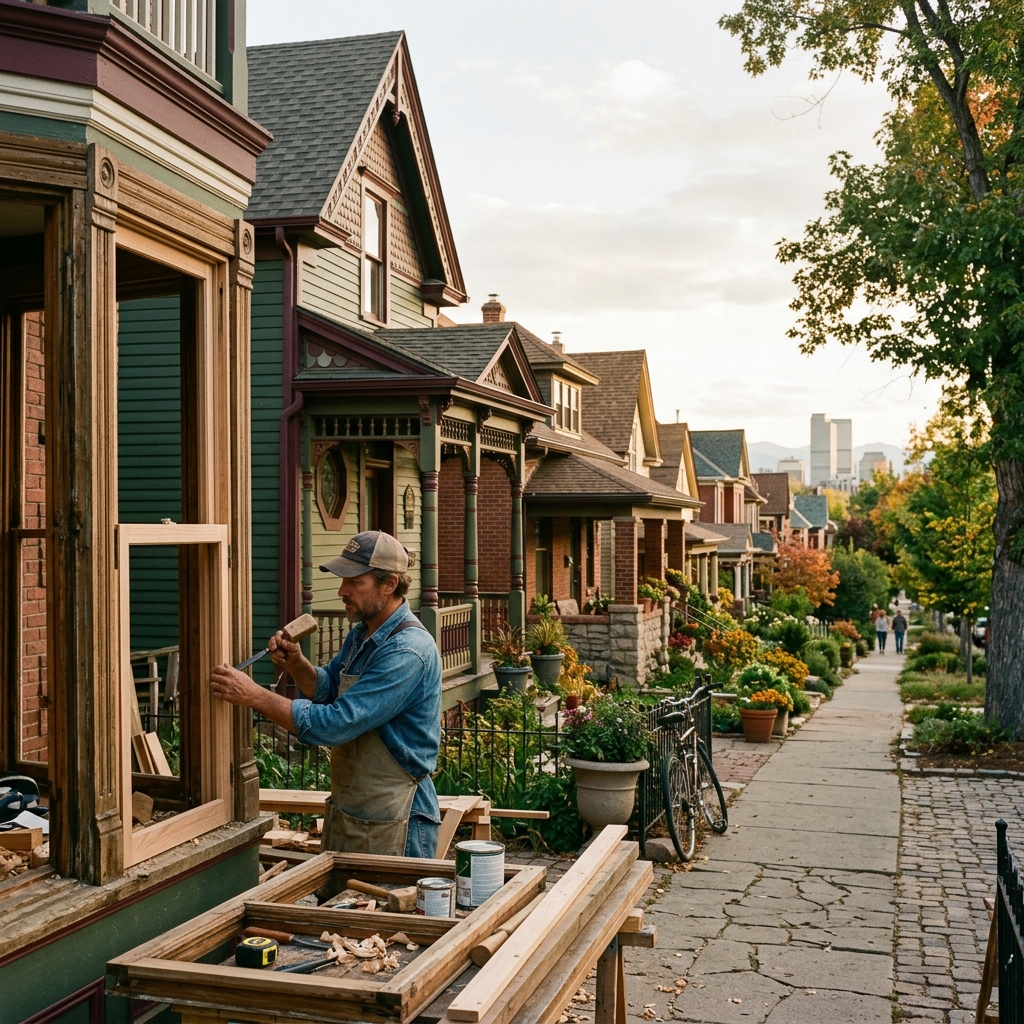
Denver is home to many historic neighborhoods, showcasing everything from bungalows to brick Victorians. Homeowners flock to these neighborhoods for their charm. Unfortunately, some homes are drafty and inefficient. Windows are often the first home feature customers want to replace. There are many rules that people need to know if they want to replace windows in Denver, Colorado.
Character Windows vs. Common Windows
Denver’s Landmark Preservation Commission (LPC) has a two-category system for classifying windows. That distinction governs all windows classified.
Character Windows are windows that define the identity of an architectural design. Examples include bay windows, leaded windows, oriel windows, and many more. These are often Custom or unique window designs. For any Victorian, this could be a stained-glass transom above their front door, while a Craftsman Bungalow could have leaded casement windows styled like a cottage. For the LPC, these windows are meant to be repaired, not replaced.
Common Windows are plain windows with standard designs and are easy to replace. These designs are often sash windows and are more straightforward. The LPC is more lenient regarding the design and replacement of these windows.
What Denver’s 2026 Guideline Updates Changed
On February 17, 2026, the LPC decided to update its design guidelines to introduce more flexibility. These updated rules in Chapter 2 now allow the replacement of standard windows, which previously required a great deal of scrutiny, as long as the windows are not categorized as character windows or character front-facade doors.
For Colorado landmark properties needing window replacement, a recent adjustment to the framework offers a more reasonable solution. Now, approvals for non-character elements have been simplified while still providing safeguards for the elements that preserve the integrity of the home’s architectural design.
Limitations Imposed by the Landmark Rules in Denver
Here is what you need to know to avoid problems when planning for window replacement in Denver, Colorado.
- Vinyl windows are not allowed in most historic districts, except in the La Alma Lincoln Park Historic Cultural District.
- Internal muntins (dividers between panes of glass located inside the insulating glass) are not allowed.
- Design reviews will not approve glued-on or snap-in muntins.
Windows made of wood, aluminum-clad wood, and fiberglass are more likely to be approved, as long as they match the original windows in every detail.
Responding to Denver’s Landmark Review Process
Window replacement on Denver, Colorado, landmark properties requires that an application for a Landmark Certificate of Appropriateness be submitted through the City’s E-Permits system. The application will include, in the supporting documents, color photographs, elevation drawings, and floor plans, along with a window schedule and a worksheet that compares the existing and proposed conditions for each window to be replaced.
This step cannot be ignored, as the city will require you to restore the property and remove any unauthorized alterations to a landmark property at your own expense.
Replacing The Windows Rules
Sometimes, the difference between a costly disapproval from the city and a smooth approval is due to a lack of knowledge of the rules. Prepare your materials in compliance with the district’s rules as outlined by the Denver Landmark Preservation office. It is also recommended to use a contractor with firsthand experience in window replacement in Denver, Colorado, especially for historic properties. You will be able to avoid costly city disapprovals while preserving your home’s character.